NFPA sprinkler statistics
Clear findings: Sprinkler systems also save lives
Text: Frank Bieber, VdS Schadenverhütung GmbH
The National Fire Protection Association (NFPA) is an organization in the area of fire protection, fire prevention that develops globally recognized standards such as NFPA 13 for planning and installation of sprinkler systems. However, the NFPA also conducts research, partly through the Fire Protection Research Foundation. In April 2024, an NFPA research report entitled "US Experience with Sprinklers" was published.
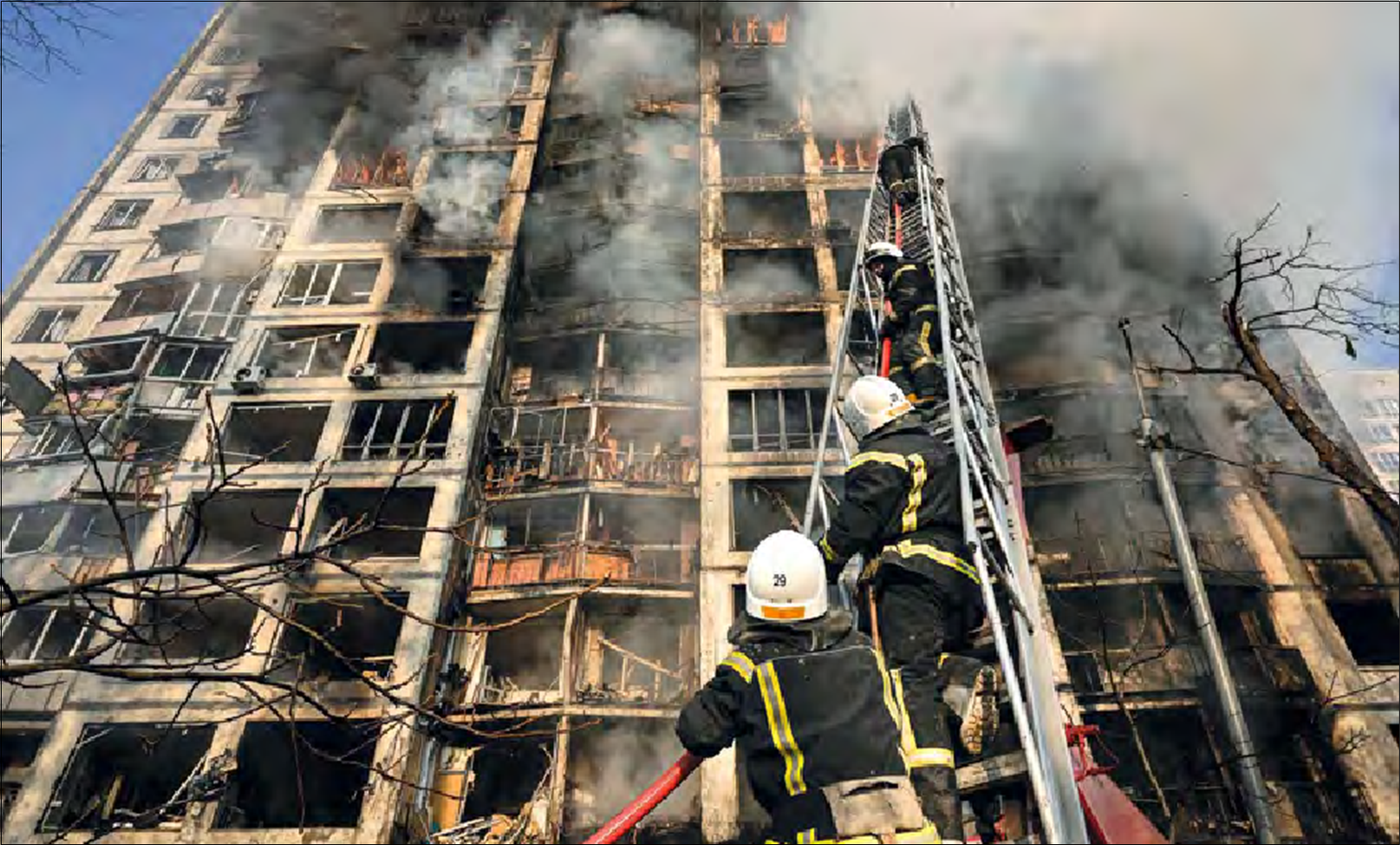
People receive better protection in buildings equipped with sprinklers—including emergency responders in the event of a fire. (Photo: E. Alyoshin/Unsplash).
First, it should be noted that figures from the US can only be compared to a limited extent with the situation in Europe or Germany: construction and firefighting tactics differ. In addition, there is a significantly higher proportion of sprinklered buildings in the US, and the use of smoke and heat extraction systems (SHEVS) varies greatly.
These are just a few examples of why the figures cannot be transferred 1:1 to Germany. Nevertheless, the physics are the same in both countries, and sprinkler work in the same way on both continents. It is therefore still very interesting to look at the figures in the USA.
Data basis and methodology
The figures in the NFPA publication are estimates derived from the National Fire Incident Reporting System (NFIRS) of the US Fire Brigade (USFA) and the annual survey of US fire brigades conducted by the National Fire Protection Association (NFPA). Fires reported to federal, state, or plant fire brigades are not included in these estimates.
The NFPA survey of fire brigade experience provides estimates for the overall picture. NFIRS is a voluntary system through which participating fire departments provide detailed information about the fires they respond to. According to the fire brigade authority, over 22,000 fire brigades, fire departments, and fire services participate in data collection. Depending on the source, there are just under 30,000 fire brigades, fire departments, and fire services in the US, so participation in this data collection is very high.
To compensate for fires reported to local fire brigades but not recorded in NFIRS, scaling ratios are calculated and then applied to the NFIRS database using the following formula: NFPA Firefighting Survey projections / NFIRS total figures.
Fires in partially protected properties and cases where fires broke out in unsprinklered areas were ignored for the purposes of considering whether sprinkler protection was present and for triggered sprinklers.
From 2017 to 2021, local fire brigades, fire departments, and fire services responded to an average of approximately 53,000 fires per year in buildings where sprinkler systems were present, representing 11 percent of all building fires. This shows how widespread sprinkler systems shall be in the US.
These fires in sprinklered properties claimed an average of 36 civilian fatalities per year (1% of all fatalities in building fires), 1,002 civilian injuries (8%), and $1.2 billion in direct property damage (10%).
It should also be noted that the data was collected by fire departments and not by sprinkler system experts or specialists. This means that there is a certain degree of uncertainty in the evaluation of sprinkler systems.
Prevalence of sprinklers
As already mentioned, according to NFPA statistics, sprinkler systems were present in 11% of building fires. However, the prevalence of sprinklers varies greatly depending on the use of the building. Figure 1 shows the proportion of sprinklered buildings for selected types of use. These figures cannot be applied to all buildings, as sprinkler – especially in the industrial sector – tend to be installed more often in buildings where it tends to burn more frequently. However, it is clear that sprinkler are much more widespread than in Germany.
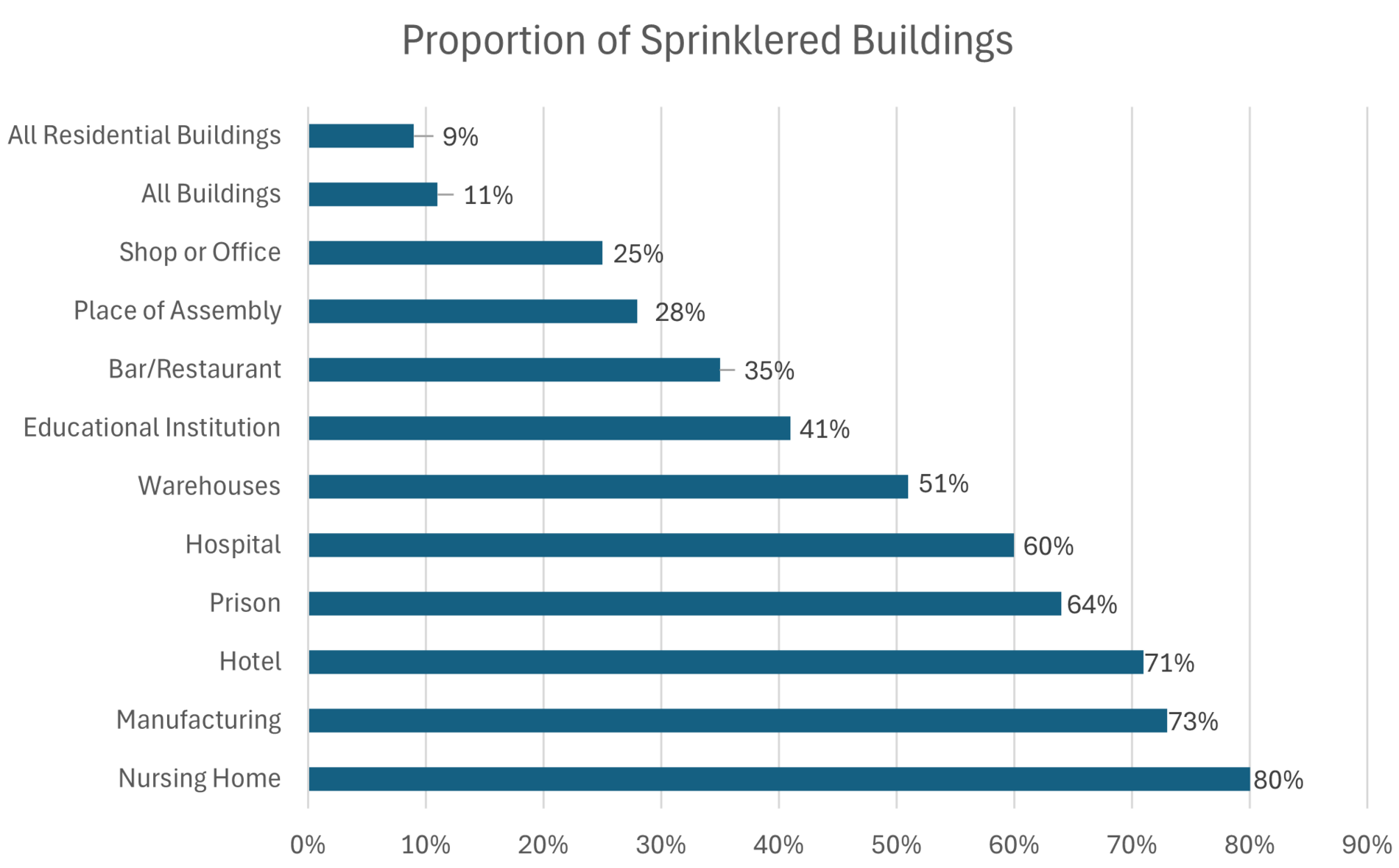
However, the proportion of nursing homes equipped with sprinklers clearly shows how highly the aspect of personal protection, life safety is regarded in the USA. There are no statistics on this from Germany, but only very few nursing homes or hospitals are equipped with a sprinkler system.
Fewer sprinkler for hygiene reasons
The reasons why we install sprinklers in fewer buildings in Germany are open to debate. One reason is certainly that Germany traditionally places great emphasis on structural fire protection, and the creation of fire compartments by means of fire break walls certainly has its merits.
One problem that the sprinkler system has to contend with in Germany is our good drinking water. It is well known that not every country in Europe has tap water that is safe to drink. In Germany, on the other hand, it is no problem to hold a glass under the tap and drink the water. One reason why we can do this is the strict requirements of the Drinking Water Ordinance and the associated technical rules.
DIN EN 1717 [*1] divides water into five liquid categories. From 1 = drinking water to 5 = "liquid that poses a health risk to humans due to the presence of microbial or viral pathogens of communicable diseases." In Germany, the responsible committee has classified water from fire extinguishing systems as category 5. As a result, it is virtually impossible to connect a (cost-effective) sprinkler system to the drinking water mains. In almost all cases, tanks and pumps shall be installed, which require space and money.
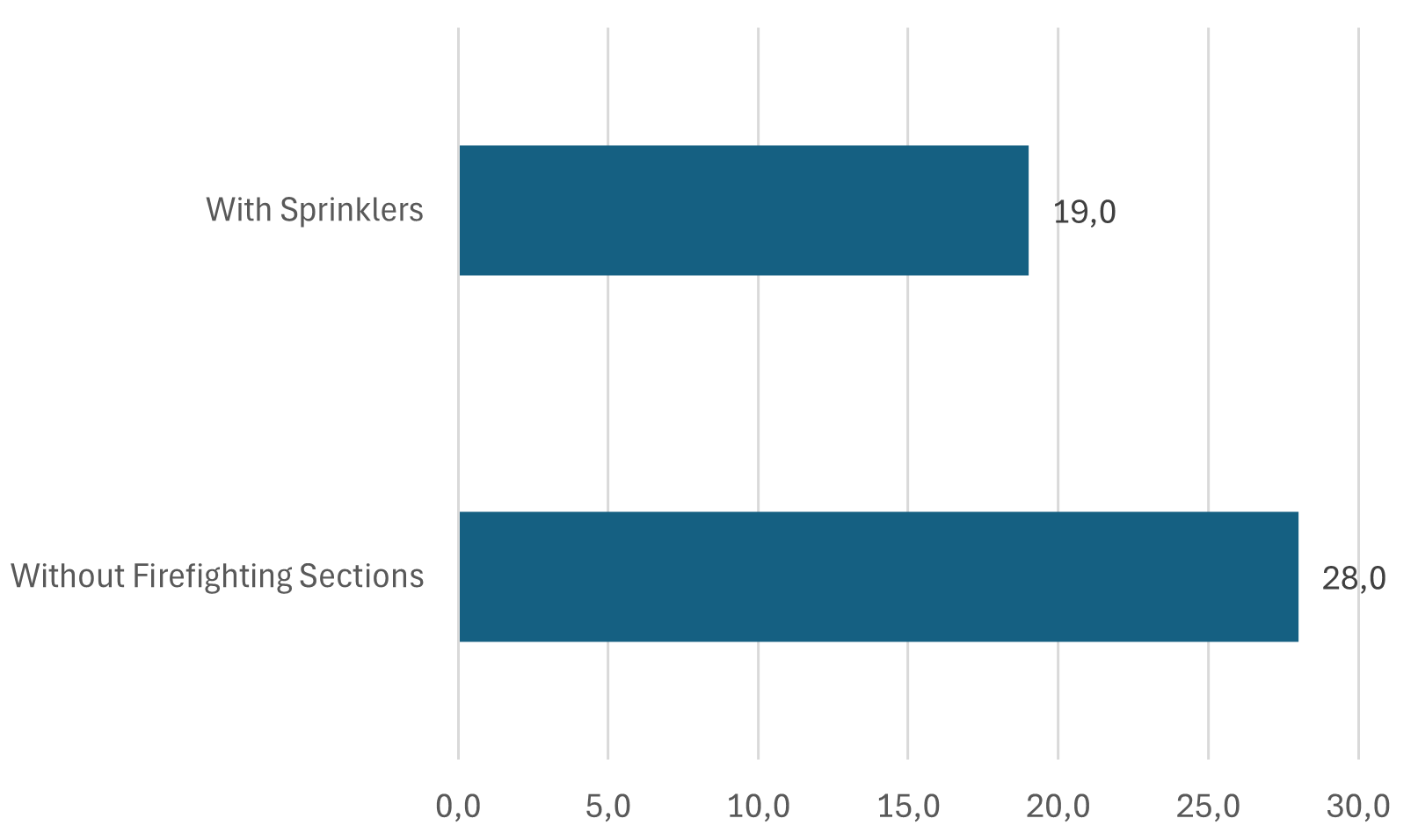
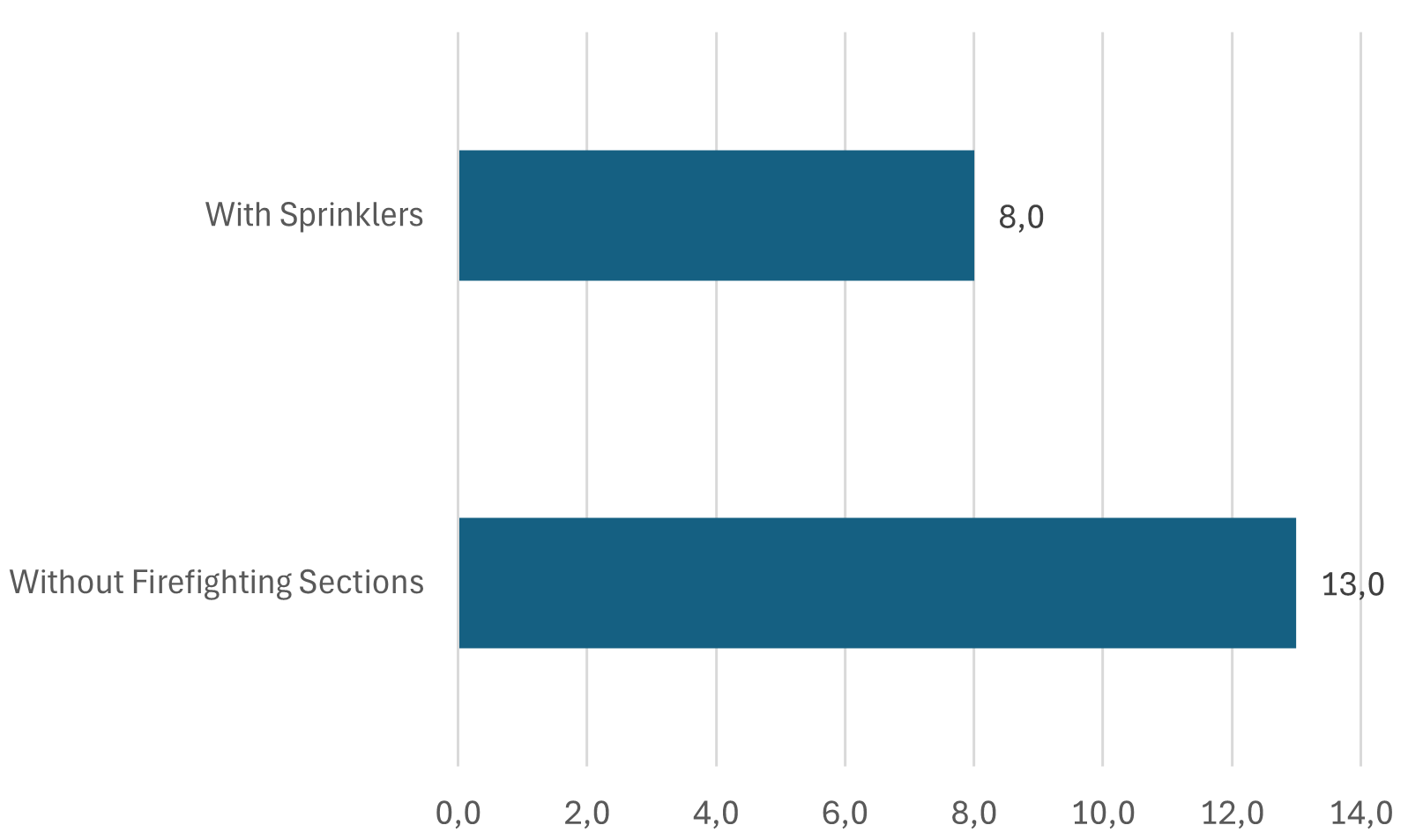
Back to the NFPA statistics and the question of how effective firefighting systems are. Here are three graphs that make some interesting statements.
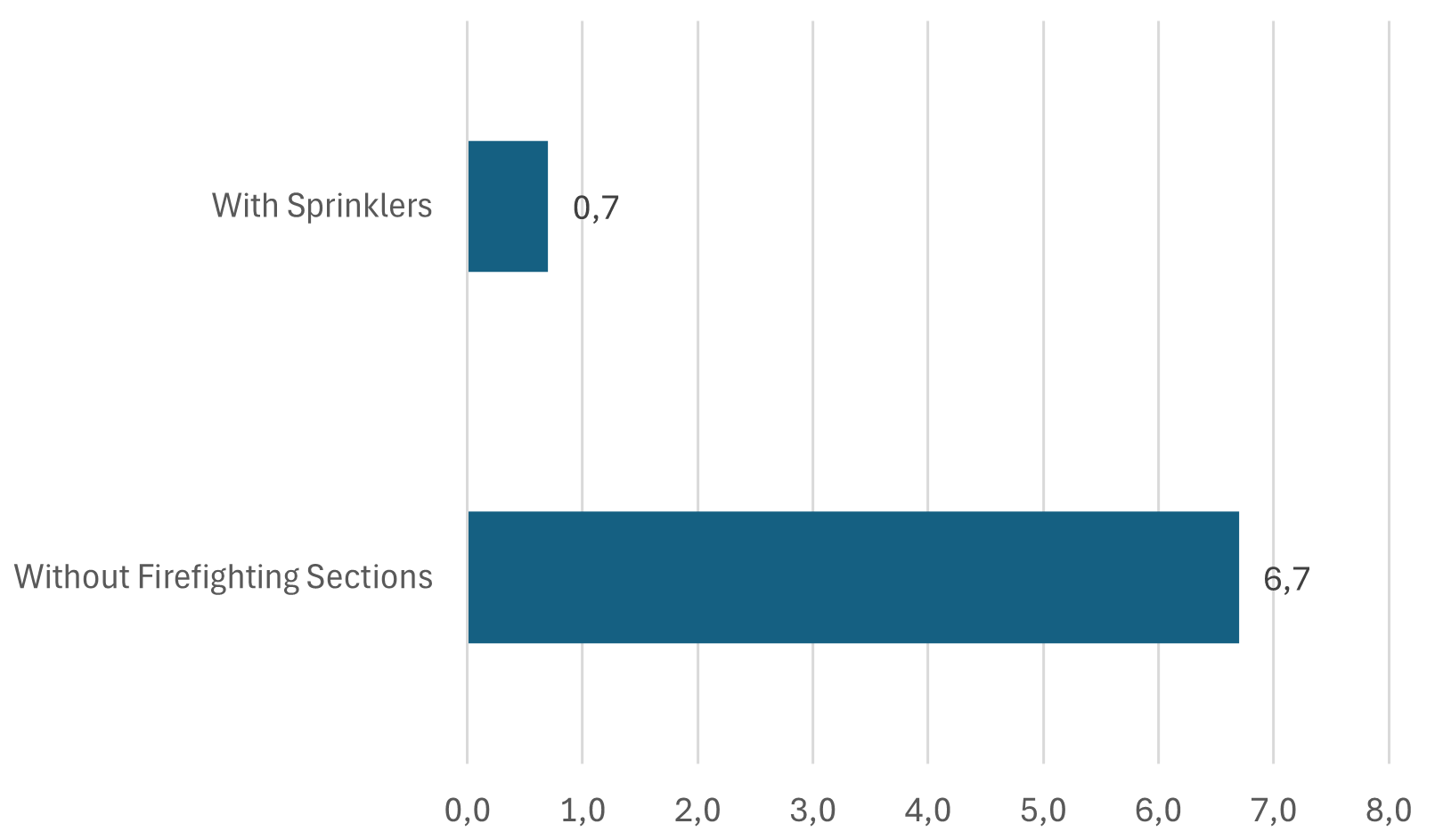
Figure 2 shows the number of civilian fatalities per 1,000 reported incidents. There is a factor of almost 10 between the figures with and without firefighting systems. But there is also a significant effect in terms of injuries in buildings with sprinklers (see Figure 3).
Firefighters often have preconceived notions about sprinkler systems. However, Figure 4 shows that firefighters also benefit from firefighting systems, as there are fewer injuries to firefighters in buildings equipped with sprinklers.
In addition to these clear figures on the personal protection provided by sprinkler systems, the study also looks at the availability and effectiveness of sprinkler systems.
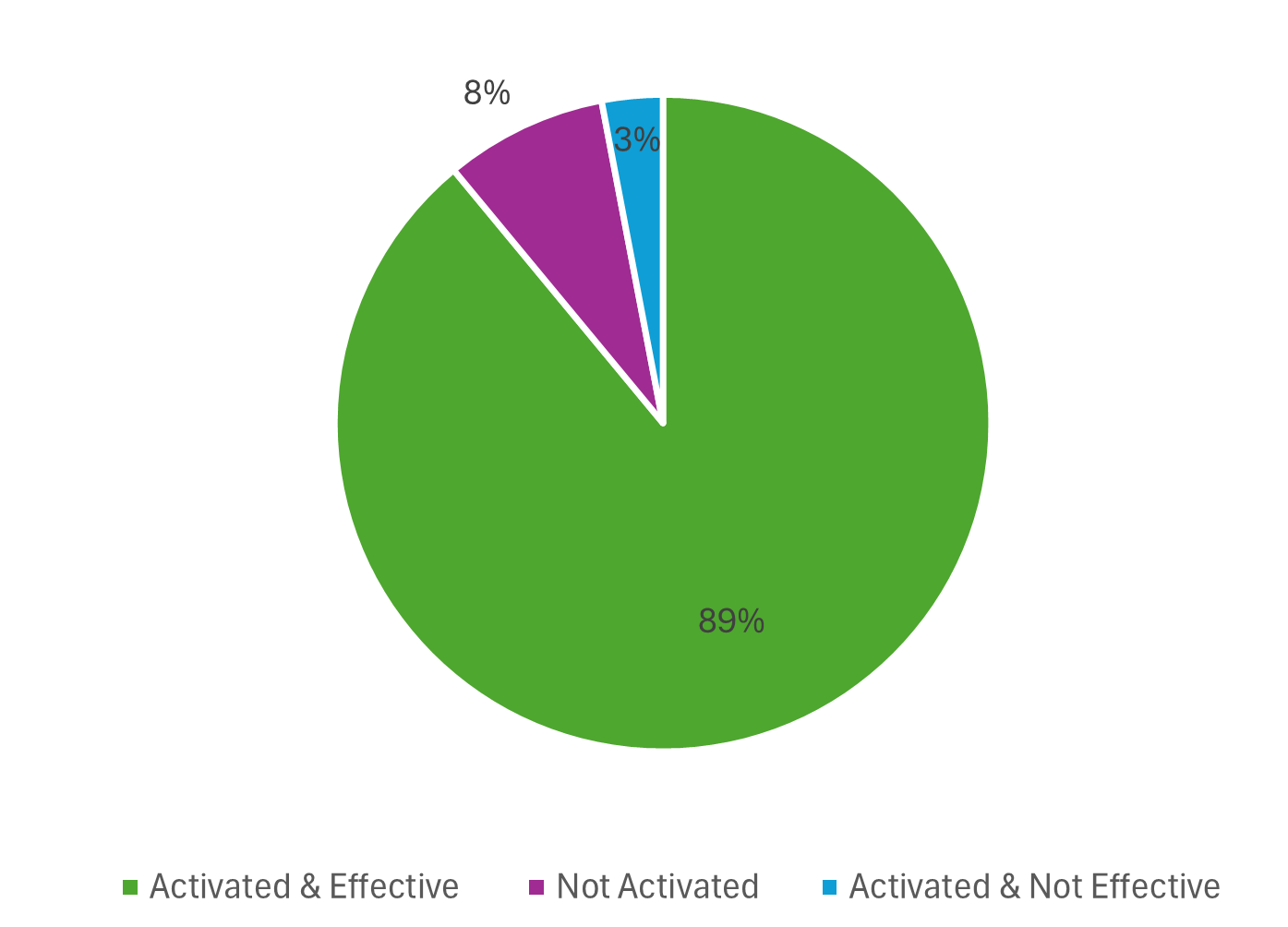
In 92% of cases where the fire was large enough to trigger sprinklers, they actually did so. Of these cases, the sprinkler system was effective in 97% of cases. This results in a rate of 89% of all cases in which the sprinklers were triggered and effective (see Figure 5).
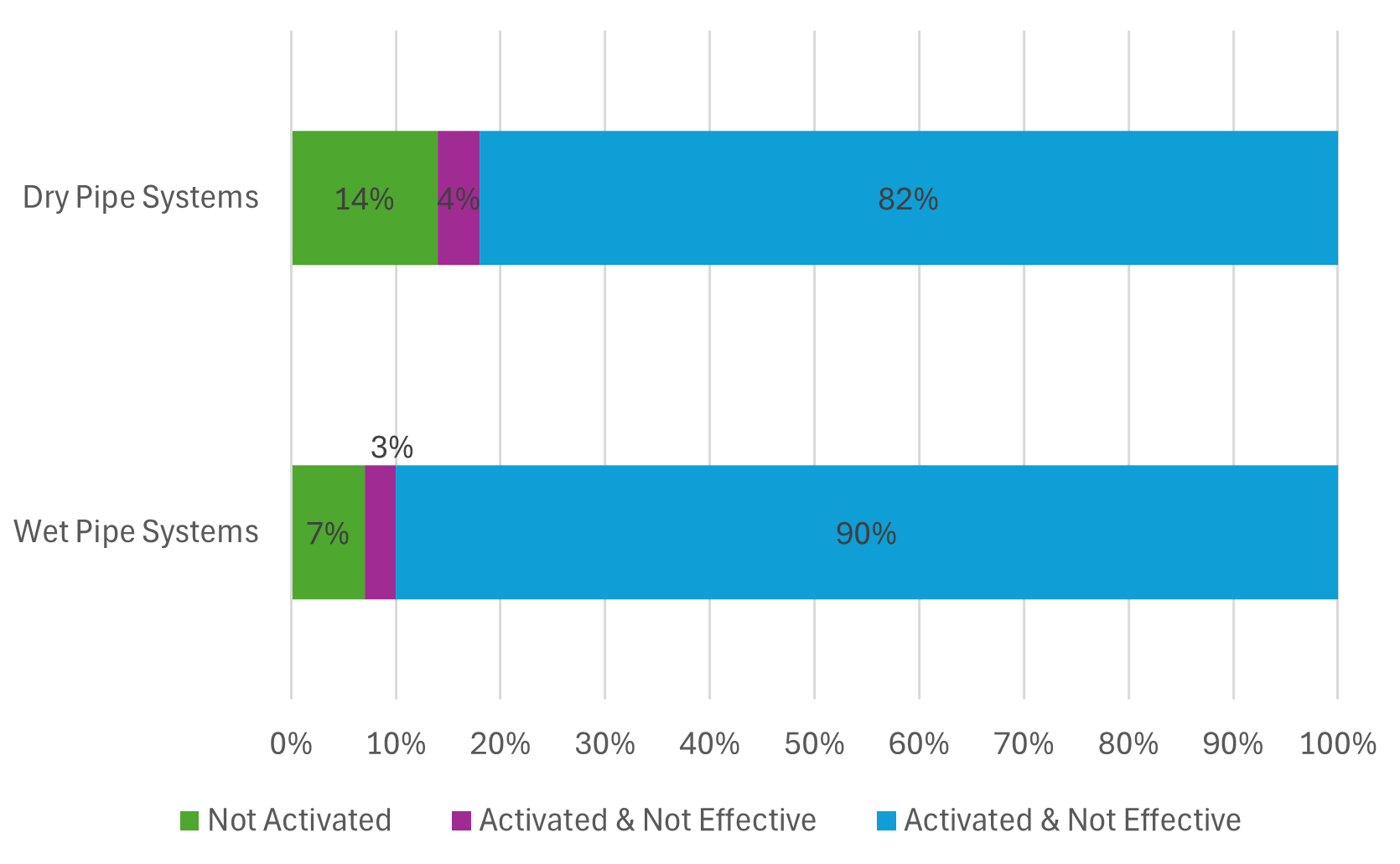
Reliability can also be further broken down by type of system (dry (pipe) systems and wet (pipe) systems). Figure 6 shows that, at 14%, the proportion of systems that did not activate at all is twice as high for dry (pipe) systems as for wet (pipe) systems, where this was observed in only 7% of fire cases. This also reflects the assessment of VdS based on several decades of experience with so-called 25/12,5-year inspections. VdS therefore requires intensive inspection of the pipework in wet (pipe) systems after 25 years at the latest, and in dry (pipe) systems after half that time.
Given these figures, it is of course very interesting to look at why the systems did not activate or were not effective. Let's first look at the systems that did not activate at all. Table 1 shows that 61% of the systems that did not activate were simply disabled and therefore could not be activated. The reasons for taking the systems out of service are not documented. However, it seems sensible to monitor the (operational) availability of the sprinkler systems electrically. This has been standard practice for systems complying with VdS regulations for years. Other regulations consider this function to be optional at most.
The next question is why systems triggered but were not effective. Table 2 shows that the largest proportion of systems were those in which the water did not reach the seat of fire. Again, there is no further detailed information available. However, it is plausible that there were spray obstructions that prevented the sprinklers from working. This shows that regular inspections of the systems are important. However, the inspection must not be limited to the pure system technology such as pumps or alarm valves. No, it is also crucial to check whether changes have been made in the extinguishing areas that affect the effectiveness of the sprinklers. New office fixtures or changes to room layouts can quickly lead to sprinkler no longer being effectively arranged. This check is an essential aspect of expert inspections by VdS.
Table 1: Reasons for sprinkler failure
System turned off | 61 |
Manual intervention | 15 |
Damaged components | 9 |
Lack of maintenance | 9 |
Unsuitable system for the type of fire | 6 |
Table 2: Reasons for ineffective sprinkler systems (%)
Water did not reach the seat of the fire. | 48 |
Design density not high enough | 30 |
Unsuitable system for the type of fire | 10 |
Damaged components | 6 |
Lack of maintenance | 4 |
Manual intervention | 2 |
In second place for lack of effectiveness is insufficient water supply. This can be due to faulty system technology, e.g., insufficient pressure in the water pipe network in the case of a direct connection or reduced pump capacity. Often, however, it is simply that the use no longer matches the original design of the firefighting system. In an apartment, the actual use will not change much.
But in a hotel, a chair storage room can become a mattress storage room full of foamed synthetic materials, and suddenly the design is no longer suitable. These changes can be particularly serious in industrial/logistics areas, for example, when metal or wooden storage containers are replaced with plastic ones. Here, too, it is crucial that the operator themselves, as well as the maintenance company and the expert(s), check whether the use still matches the design of the system.
Damaged components were responsible for the failure of sprinklers in only 6% of cases. This shows that sprinkler systems are very robust. The data on fires in residential buildings is particularly interesting [*2]. As already mentioned, sprinkler systems are uncommon in this type of building in Germany. However, in 8% of the residential fires evaluated, an automatic firefighting system was present. In 98% of cases, these were sprinkler systems (89% wet (pipe) systems, 9% dry (pipe) systems). The remaining 2% are recorded as "Others" and also include pre-action systems and water spray extinguishing systems.
The reduction in fatalities per 1,000 operations is even more significant in residential buildings than in all building types. Figure 7 shows that the figure of 8.3 deaths per 1,000 operations without sprinkler systems was reduced to 0.9 for operations with sprinklers. This means that there are almost 90% fewer fatalities in residential buildings with sprinklers compared to those without.
The effectiveness of sprinklers is demonstrated by evaluating the number of sprinklers triggered. In 85.2% of fires in residential buildings, only one sprinkler was triggered, and in 99.2% of cases, a maximum of five sprinklers were triggered (see Figure 8). In relation to all building fires, "only" 96% of cases involve up to five sprinklers being triggered. These figures suggest that fears of damage caused by large amounts of sprinkler water are generally unfounded.
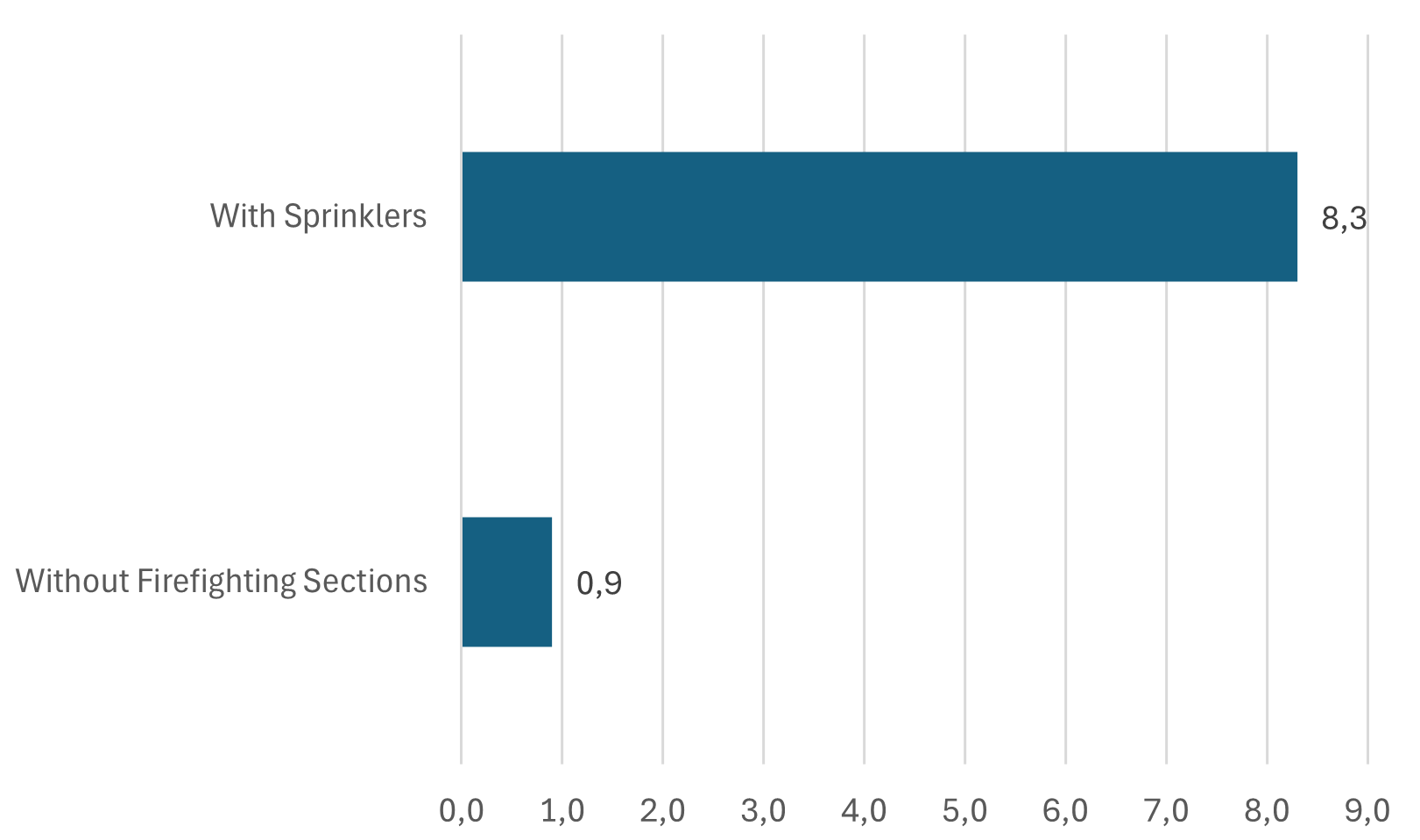
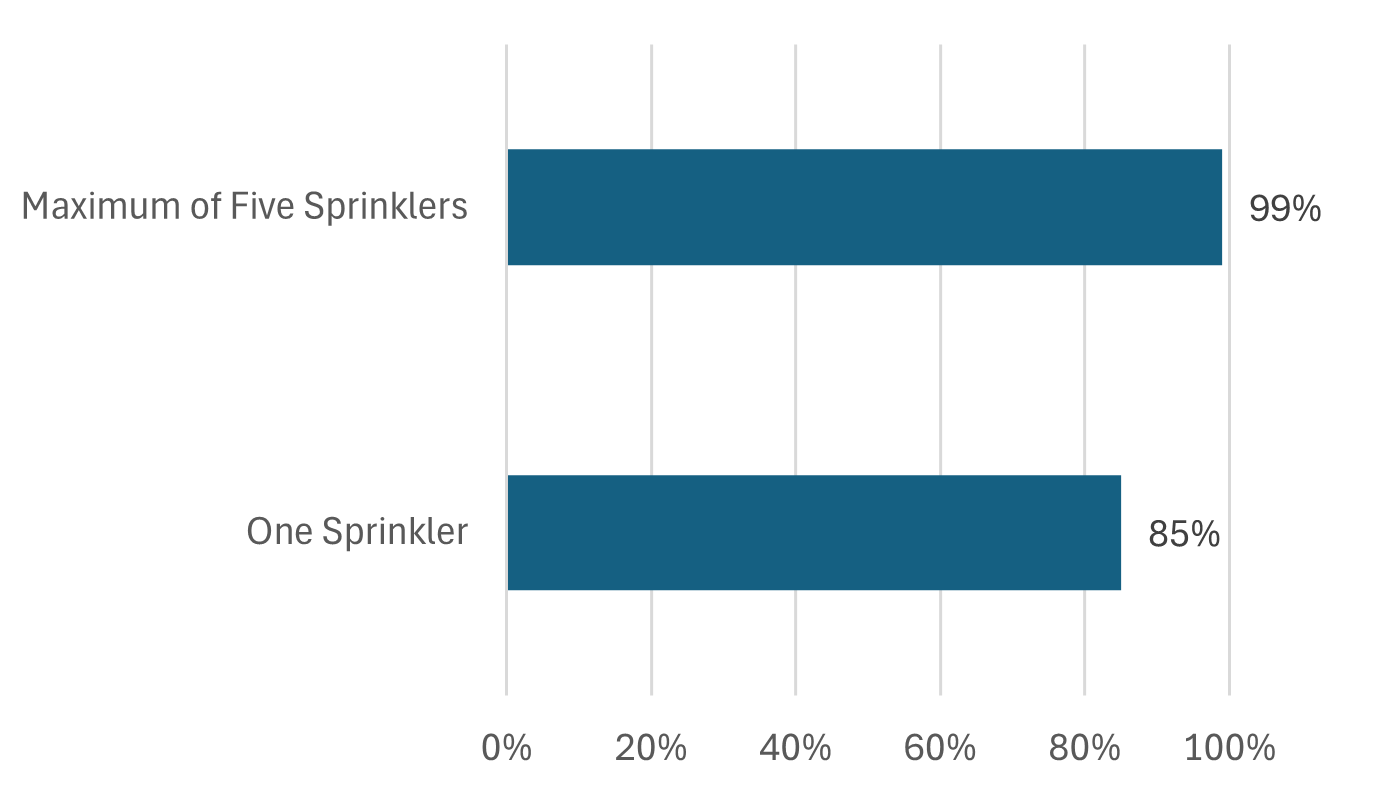
Table 3: Effectiveness of sprinkler systems depending on the number of triggered sprinklers
Number of sprinkler units activated | Effectiveness |
1 | 99 % |
2 | 97 % |
| 3 | 96 % |
4 | 92 % |
| 5 | 90 % |
| 6 to 10 | 90 % |
| 11 or more | 82 % |
Further evaluations show that sprinklers are particularly effective due to their rapid and early activation. Table 3 shows that when a sprinkler is activated, its effectiveness is 99%.
If the first sprinklers fail to control the fire effectively, the success rate decreases, and if more than 10 sprinklers are triggered, the effectiveness is only 82%.
However, it shall be noted here that no distinction is made between different types of sprinklers.
There are special warehouse sprinklers, for example, where the water supply is designed to supply nine sprinklers simultaneously.
Other concepts are based on 30 or more sprinklers, or even over 100 sprinklers in the case of in-rack sprinkler.
Prevention of spread
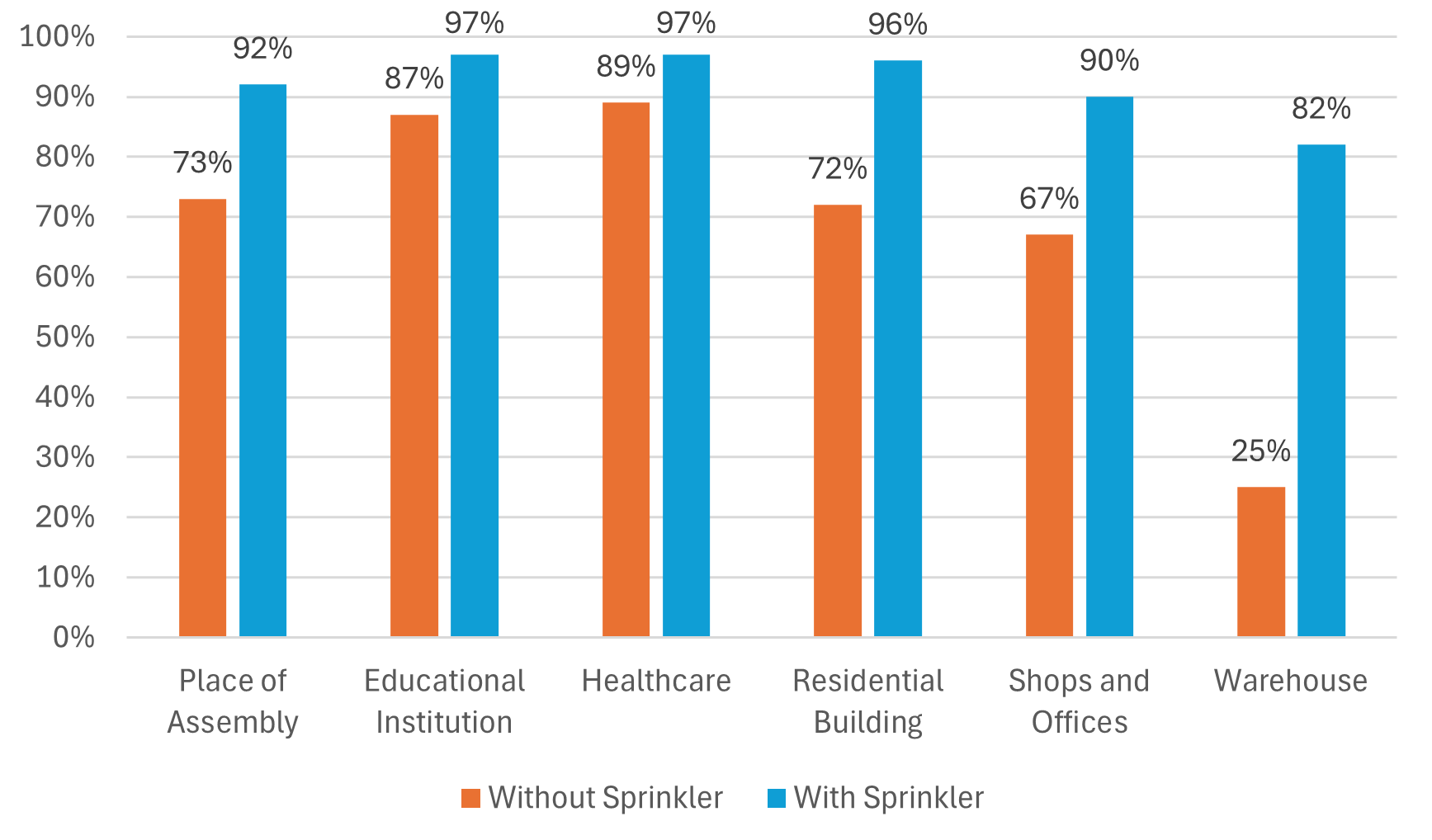
Fires can spread quickly, especially in buildings where there are no requirements for the fire resistance of building components or at least fire-retardant doors. Figure 9 shows that a sprinkler system can increase the proportion of fires in which the fire does not leave the room where it started by up to 57 percentage points. This effect is particularly low at eight percentage points in the healthcare sector (including hospitals and nursing homes), but it should be noted here that room doors often have fire protection engineering requirements and that limiting the fire to one room can also lead to casualties.
Protection of goods/property
In addition to the important protection of life and limb, sprinkler also protect real value. The study shows that property damage, loss of property is 66% lower in fires in places of assembly, 59% lower in healthcare facilities, and 69% lower in shops and offices. At first glance, it is surprising that no reduction in property damage was observed in production facilities and warehouses. However, it shall be taken into account that, on the one hand, sprinklers are increasingly being installed in buildings where there is a high fire risk or a high expectation of damage. Sprinkler systems are therefore not ineffective here, but buildings without sprinklers have simply not received protection because there was a low expectation of damage.
On the other hand, the statistics only refer to property damage, loss of property. For operators and insurers, however, the damage caused by business interruption is often much greater. The author is not aware of any reliable sources for the following statement, but it is assumed that one to two-thirds of companies are no longer operating on the market one year after a major fire. Even if property damage, loss of property is paid for by the insurer, competitors do not sit idly by and customers switch providers.
Summary
The NFPA study impressively shows that sprinkler systems rescue lives. In the US, where significantly more buildings are equipped with sprinklers than in Germany, the mortality rate in residential fires is almost 90% lower in buildings with sprinklers than in buildings without sprinklers. Firefighters are injured less often, property damage, loss of property is significantly reduced – and all because sprinklers contain fires at an early stage or even extinguish them completely.
Why do we ignore these clear facts in Germany? While structural fire protection traditionally dominates in this country, active fire protection is often neglected. Yet practical experience shows that sprinkler systems offer reliable protection – even in residential buildings, nursing homes, and hospitals, where people are particularly at risk.
It is high time to rethink! Germany needs to see a wider use of sprinkler systems – not only in industrial construction, but everywhere where people live and work. We shall learn from the findings of the NFPA and finally establish sprinkler systems as what they have been proven to be: lifesavers.
Endnotes
*1: DIN EN 1717 – Protection of drinking water against contamination in drinking water installations and general requirements for protective devices/security devices to prevent drinking water contamination by backflow; German version EN 1717:2000; Technical rule of the DVGW.
*2: The statistics refer to houses and apartments. Dormitories, barracks, assisted living facilities, nursing homes, etc. are not included here.