
Aging Processes in Sprinkler Systems
System inspection in accordance with VdS CEA 4001 and VdS leaflet 2091-2
In his technical article, Nico Gregor, Product Group Manager for the 25/12,5-year inspection of existing systems at the VdS Inspection Service, highlights the key factors for the long-term maintenance of a sprinkler system.
Text: Nico Gregor, VdS Schadenverhütung GmbH (S&S Report 01/26, Download)
Sprinkler systems have been a central component of building fire protection for decades. However, as these systems age, the risks associated with material degradation increase, making regular inspections of existing systems essential.
Deposits and corrosion as risk factors
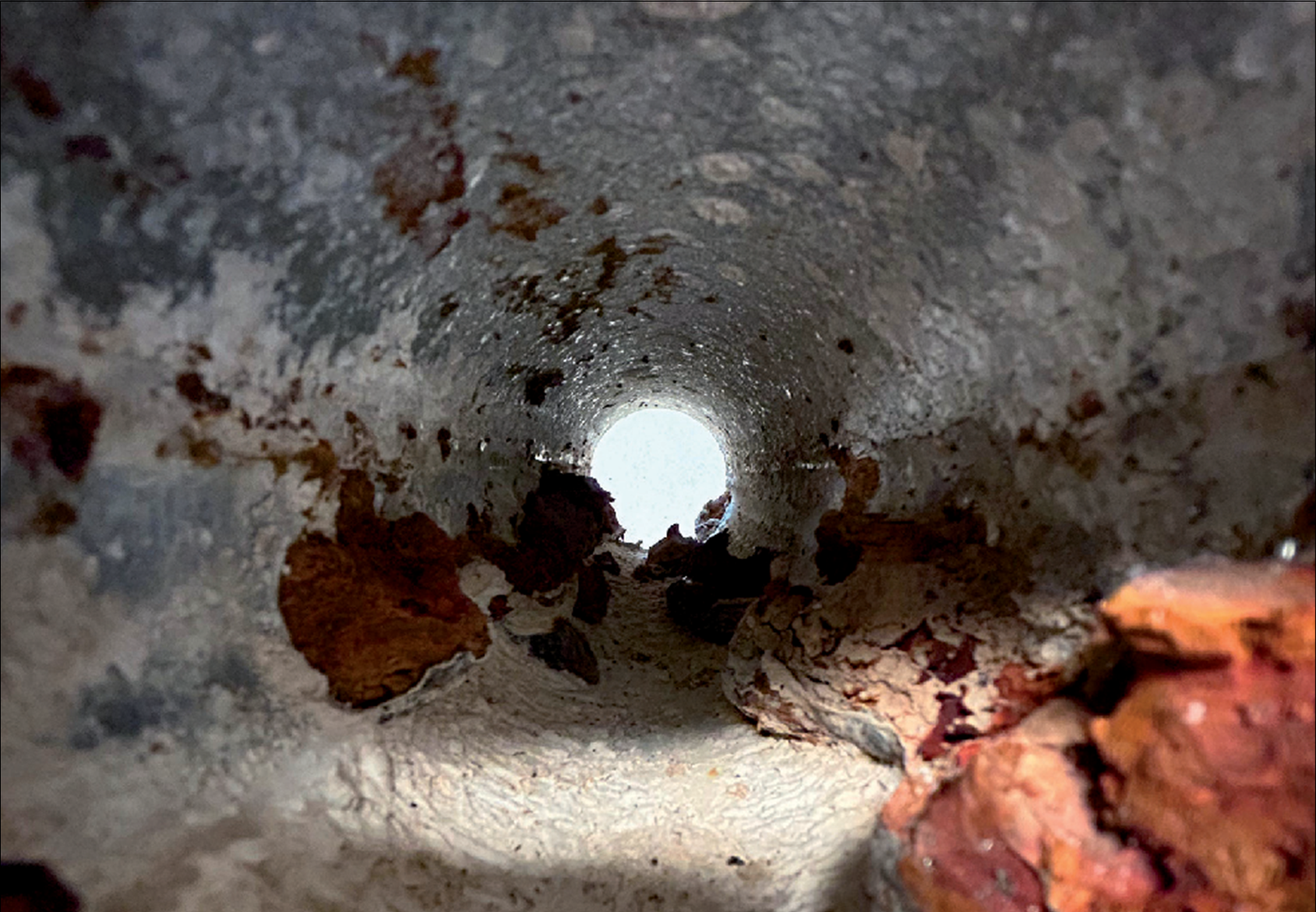
Sprinkler systems are subject to natural aging processes over the course of their operation time. One of the main causes of this is corrosion within the pipework, which can compromise both the functional safety and the hydraulic performance of the system.
Corrosion processes generate corrosion products such as rust, deposits, or sludge, which can accumulate in the pipework. This results in reduced pipe cross-sections or impaired movement of moving components. This condition is particularly critical during a system activation, as deposits can slow down water flow or partially block sprinkler heads.
The causes of corrosion are varied. Key influencing factors include the oxygen content of the water, ambient temperatures, and the quality of the firefighting water. In addition, environmental factors such as periodic temperature fluctuations, production processes involving corrosive atmospheres, or permanent damp conditions can significantly increase the susceptibility to corrosion.
Therefore, both proper maintenance and the quality of the original installation are crucial for the service life of a sprinkler system. Regular, controlled draining, minimizing water changes, and avoiding unnecessary oxygen ingress help reduce corrosion. Likewise, the quality of the piping used and a properly sloped pipework play an important role in preventing permanent residual water retention and thus conditions that promote corrosion.
Requirements and Procedures for a 25/12,5-Year Inspection
To ensure long-term functional safety despite these aging processes, 25/12.5-year inspections of existing systems are mandatory. For wet (pipe) systems, such an inspection is required after 25 years; for dry (pipe) systems, it is required after just 12.5 years. The sprinklers installed in the system shall undergo laboratory testing as part of this process. For conventional sprinklers, the inspection interval is also 25 years, while shorter intervals may apply for special designs.
The relevant requirements are set forth in Chapter 18.4.6 of VdS CEA 4001. The detailed procedure for the 25/12,5-year inspection of existing systems is described in VdS Leaflet 2091-2 “Maintenance of Operational Availability of Water-Based Fire Extinguishing Systems, Part 2: 25/12,5-Year Inspection of Existing Systems.”
The leaflet was published in October 2025 and has been converted from Annexes A and B of the earlier VdS Leaflet 2091 into a standalone leaflet. Significant changes affect in particular the process for laboratory testing of sprinklers. In addition, specific test procedures for special cases such as extinguishing nozzles, low-pressure water mist sprinklers, and ESFR sprinklers have been included for the first time.
As part of a 25/12,5-year inspection, both the pipework and the sprinklers must be systematically examined. The pipework is inspected, among other things, through an internal visual inspection using endoscopy as well as through ultrasonic measurements to determine the remaining wall thicknesses. The technical condition of the system is assessed based on these results. Deficiencies identified may include, for example, cross-sectional constrictions or reduced wall thicknesses.
The two sets of regulations can be applied individually or in combination. If the triggering system is described in the overall concept, the necessary interface is described and evaluated in the procedure according to VdS 6020.
With this modular procedure, it is possible to obtain certification of a protection concept for extinguishing systems or fire detection only, as well as for a holistic protection concept that takes into account the interfaces between the two systems and is adapted to the individual concept and specific requirements.

During or following the inspection, sprinklers are also removed and subjected to laboratory testing. Depending on the total number of installed sprinklers, a test batch of at least 20 sprinklers or more is required for each sprinkler type.
For suspended dry (type) sprinklers, for example, test batches of five sprinklers are permitted. The result of this test determines whether the sprinklers can continue to be used or whether replacement is necessary.
Insights and experiences
The necessity of 25/12,5-year inspections for existing systems can also be demonstrated statistically. Between 1998 and 2022, the VdS Technical Inspection Agency inspected more than 23,000 pipeworks. In wet (pipe) systems, approximately 30% of the systems exhibited moderate to significant deficiencies after 25 years. For dry (pipe) systems, this proportion was already over 55% after just 12.5 years. As the operation time increases, the distribution shifts further toward significant deficiencies.
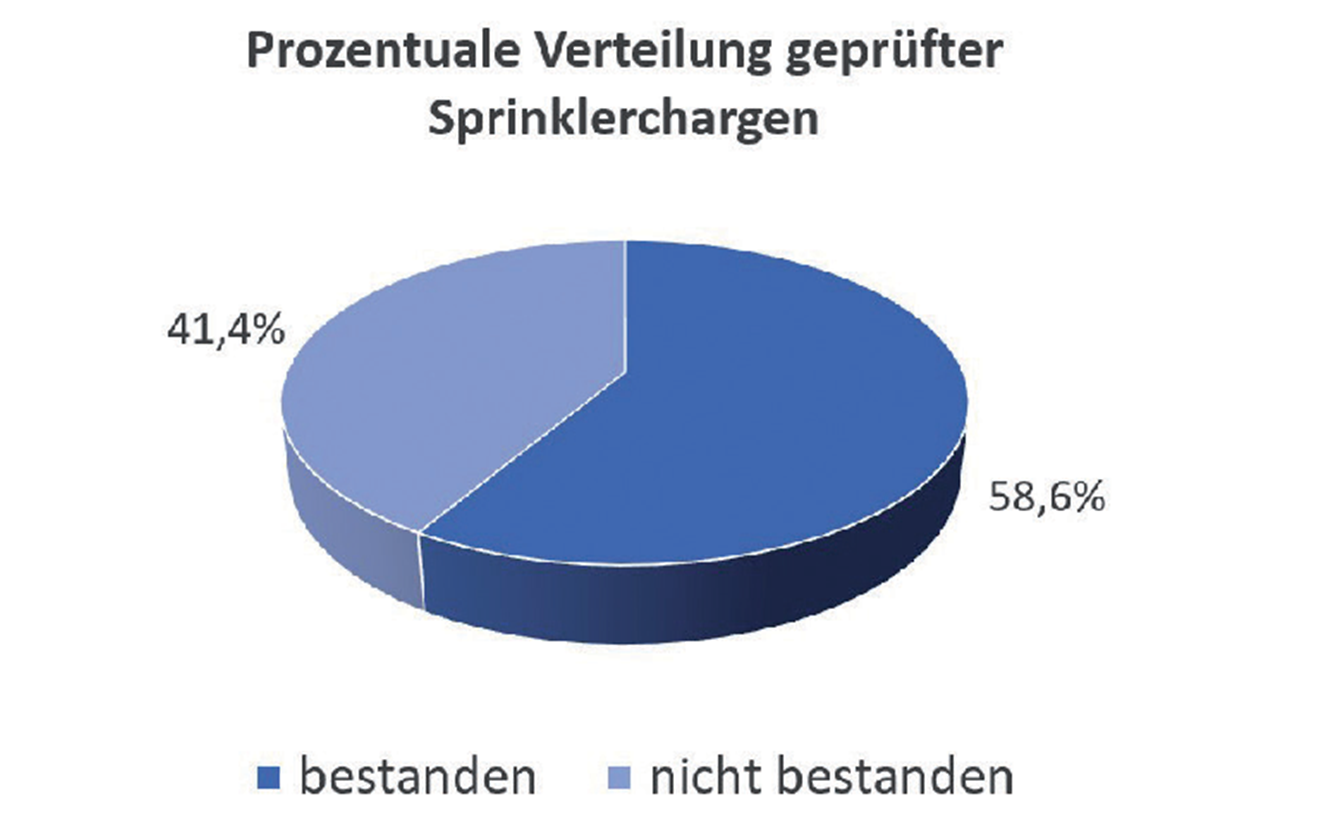
The results of the laboratory tests conducted also confirm this trend. Between 2018 and 2025, the VdS water laboratory tested approximately 8,650 batches of sprinklers. About 41.4% of these batches failed the laboratory test after 25 years.
The available data underscore the relevance and necessity of 25/12,5-year inspections of older systems as well as laboratory testing of sprinklers. The ultimate goal is the long-term maintenance of a functional sprinkler system that reliably meets its operational performance requirements even after a long operation time and effectively extinguishes fires in the event of a fire.